/ Technologies



/
article
/
Op het eerste gezicht ziet uw bedrijf er misschien gezond uit. De inkomsten komen binnen, de uitgaven zijn beheersbaar en uw winst- en verliesrekening lijkt in orde. Maar onder de oppervlakte kunnen losgekoppelde systemen elke dag stilletjes geld kosten.
Dit gebeurt op kleine manieren: teams exporteren spreadsheets, voeren gegevens opnieuw in, herstellen synchronisatiefouten, zoeken naar goedkeuringen en wachten op rapporten. Geen van deze problemen wordt meestal vetgedrukt weergegeven in de winst- en verliesrekening, maar samen kunnen ze duizenden of zelfs miljoenen kosten per jaar.
Dat is het gevaar van slechte integraties. De schade is reëel, maar versnipperd.
Voor leiders, managers en oprichters op CX-niveau is dit meer dan een IT-probleem. Het is een groeiprobleem, een kwestie van winstgevendheid en een probleem met de klantervaring.
Laten we eens kijken wat slechte integraties echt kosten en waarom dit het moment is om in actie te komen.
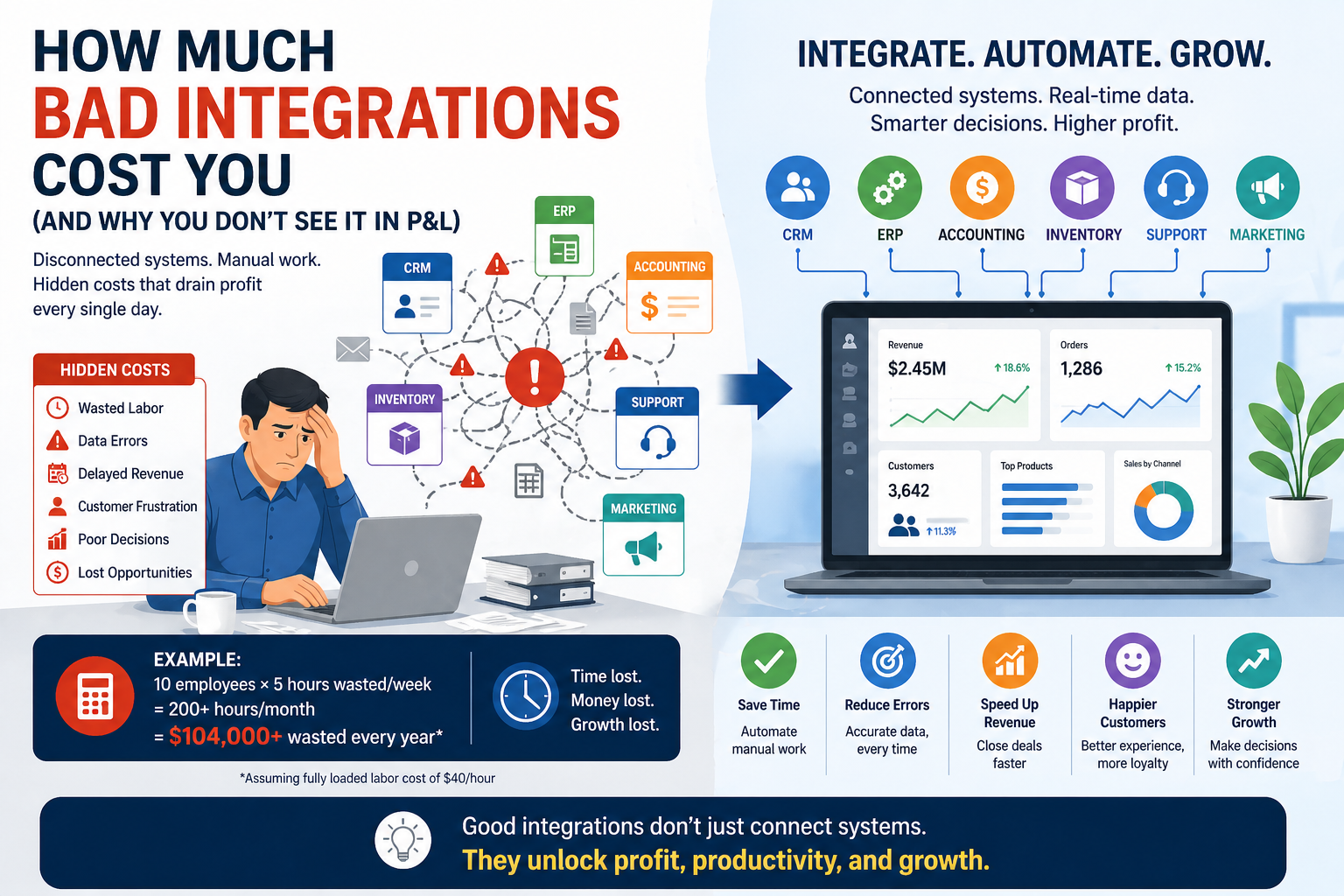
Traditionele winst- en verliesrekeningen categoriseren zichtbare uitgaven zoals salarisadministratie, softwareabonnementen, huur en marketinguitgaven. Maar integratieproblemen vallen niet netjes in één categorie.
In plaats daarvan worden de kosten verborgen in:
Omdat de impact verspreid is over verschillende afdelingen, onderschatten veel leiders deze.
Een financieel rapport zou kunnen zeggen dat de loonlijst stabiel is. Maar hoeveel loonuren worden verspild omdat werknemers gegevens handmatig tussen systemen verplaatsen?
Daar zit de echte lekkage.
Een van de meest voorkomende verborgen kosten is het betalen van getalenteerde werknemers om repetitieve taken uit te voeren.
Voorbeelden zijn onder andere:
Wanneer werknemers uren bezig zijn met werk dat automatisering zou moeten doen, stijgen uw arbeidskosten zonder de productie te verhogen.
Als 10 werknemers elk 5 uur per week verspillen aan handmatige taken:
Voor een volledig opgeladen prijs van $40/uur, dat is $104.000 per jaar.
En dat is voordat een burn-out in beeld komt.
Handmatige processen leiden tot fouten. Typefouten, dubbele invoer, verouderde klantendossiers, prijsverschillen, verkeerde verzendingen, ontbrekende facturen — het komt allemaal bij elkaar op.
Zelfs kleine fouten kunnen dure gevolgen hebben:
Een slechte gegevensstroom tussen systemen betekent dat mensen beslissingen nemen op basis van onvolledige of onjuiste informatie.
Dat is niet alleen inefficiënt, maar ook gevaarlijk.
Een bekwaam API-integratiebedrijf kan veel van deze problemen oplossen door betrouwbare, geautomatiseerde gegevensstromen in uw systemen te creëren.
Leidinggevers hebben snel nauwkeurige gegevens nodig. Maar als teams dagenlang bezig zijn met het consolideren van rapporten van meerdere systemen, worden de beslissingen langzamer.
Dit heeft vaak invloed op:
Wanneer leiderschapsbeslissingen worden uitgesteld door verouderde dashboards of tegenstrijdige spreadsheets, gaan er kansen voorbij.
Snelheid is belangrijk. Markten bewegen snel. Concurrenten handelen snel. Je systemen zouden dat ook moeten doen.
Klanten zullen misschien nooit zeggen: „Je integraties zijn slecht.”
Maar ze zullen de symptomen voelen:
Slechte interne connectiviteit zorgt voor slechte externe ervaringen.
En als klanten weggaan, wordt het verloop vaak veroorzaakt door prijzen, concurrentie of productproblemen, terwijl de hoofdoorzaak operationele frictie was.
Daarom investeren moderne klantgerichte bedrijven in diensten voor systeemintegratie als onderdeel van de ervaringsstrategie, niet alleen als IT-onderhoud.
Niet verbonden systemen verstoren vaak de inkomstenactiviteiten.
Veelvoorkomende voorbeelden:
Zelfs als de inkomsten uiteindelijk binnenkomen, zorgt een vertraagde cashflow voor stress.
Erger nog, sommige kansen verdwijnen volledig.
Oprichters zijn vaak geobsedeerd door het genereren van leads, terwijl ze de lekken in de funnel negeren die worden veroorzaakt door slechte operaties.
Dat is alsof je water giet in een emmer met gaten.
Dit is een verborgen kostenpost die veel leidinggevenden over het hoofd zien: frustratie.
Goede werknemers hebben een hekel aan kapotte processen. Ze hebben een hekel aan dubbele invoer, verwarrende tools en vermijdbare chaos.
Na verloop van tijd leiden slechte systemen tot:
Als je beste mensen het gevoel hebben dat ze tegen systemen vechten in plaats van markten te winnen, lijdt het moreel eronder.
Talent vervangen is duur. Productieve mensen behouden is goedkoper.
Wat bij 10 werknemers werkt, breekt vaak op 50. Wat werkt bij een omzet van 2 miljoen dollar kan instorten bij $20 miljoen.
Naarmate bedrijven groeien, zorgen losgekoppelde systemen voor nog grotere problemen:
Groei zonder integratie voelt vaak rommelig en duur aan.
Daarom werken schaalbedrijven vaak samen met een advies over software-integratie expert voordat de complexiteit uit de hand loopt.
Je hebt geen perfect model nodig. Begin eenvoudig.
(Handmatige uren x uurkosten) + foutkosten + vertragingskosten + invloed op het verloop + alternatieve kosten
Het aantal verrast leiderschapsteams vaak.
Sterke integratie verbindt niet alleen tools. Het verbetert de manier waarop het bedrijf werkt.
Tekenen van gezonde systemen:
Een kwaliteit integrator van bedrijfssystemen richt zich op bedrijfsresultaten, niet alleen op technische verbindingen.
Dat onderscheid is belangrijk.
Wachten kost geld.
Elke maand vertraging kan het volgende betekenen:
Ondertussen stroomlijnen concurrenten hun activiteiten en handelen ze sneller.
Hoe eerder u integratieproblemen oplost, hoe sneller u een hefboomeffect creëert.
Je hoeft niet alles in één keer op te lossen.
Veel bedrijven zien een snelle ROI door slechts één pijnlijke workflow op te lossen.
Interne teams hebben het druk. Integraties kunnen jarenlang projecten voor het „volgende kwartaal” worden.
Specialisten brengen:
Of je nu een nodig hebt API-integratiebedrijf, strategisch adviseur of volledige implementatiepartner, verkort expertise het pad vaak aanzienlijk.
Voor technische standaarden en beste praktijken kunnen bronnen zoals de officiële REST API-richtlijnen van Microsoft ook helpen:
https://learn.microsoft.com/
Slechte integraties kondigen zich zelden luid aan. Ze komen stilletjes naar voren: als verspilde tijd, verborgen arbeidskosten, slechte beslissingen, frictie bij klanten en vastgelopen groei.
Daarom zien veel bedrijven het probleem pas in de winst- en verliesrekening als het pijnlijk wordt.
Voor CXO's, managers en oprichters is dit een kans om een voorsprong te nemen. Betere integraties betekenen snellere teams, tevreden klanten, schonere gegevens en sterkere marges.
De vraag is niet of slechte integraties geld kosten.
Het is hoeveel ze je op dit moment kosten.
Zoek naar handmatige oplossingen, rapportagevertragingen, herhaalde fouten en klachten van klanten die verband houden met hiaten in het proces.
Het automatiseren van repetitieve workflows tussen veelgebruikte systemen zoals CRM, ERP en boekhoudtools levert vaak een snelle ROI op.
Absoluut. Complexiteit vroegtijdig oplossen is goedkoper dan opnieuw opbouwen na een schaal.
Nee. Kleine en middelgrote bedrijven hebben vaak nog meer last van integratiepijn omdat teams meerdere petten dragen.
Als systemen die niet met elkaar verbonden zijn van invloed zijn op de omzet, de klantervaring of de zichtbaarheid van het management, is het tijd om professionele ondersteuning te onderzoeken.
Hoeveel slechte integraties u kosten (en waarom u dit niet in P&L ziet)
/ Laten we praten — of u nu al weet wat u nodig hebt of gewoon de mogelijkheden wilt verkennen.

B/ue Dynamic NL
Lange Viestraat 2 B, 3511 BK Utrecht
Netherlands
Blue Dynamic, B.V.
KVK: 83303308
BTW: NL862820972B01
B/ue Dynamic CZ
Prazska 239, 250 66 Praag
Tsjechische Republiek
Blue Dynamic, s.r.o.
ICO: 02339234
DIC: CZ02339234